By bridging grammatical divides and leveraging modern digital pedagogy, the Iranian educator is making regional language acquisition more accessible than ever
September 12, 2026
TEHRAN — Over the past decade, the dynamics of language acquisition have undergone a profound structural transformation. While institutional classrooms and conventional textbooks long served as the primary conduits for cross-cultural education, the emergence of structured digital pedagogy has unlocked unprecedented avenues for learners worldwide. In the context of Middle Eastern linguistic exchange, educator and content specialist Ali Fatemi has established himself as a central figure in modernizing how the Persian language is taught to Arabic native speakers.
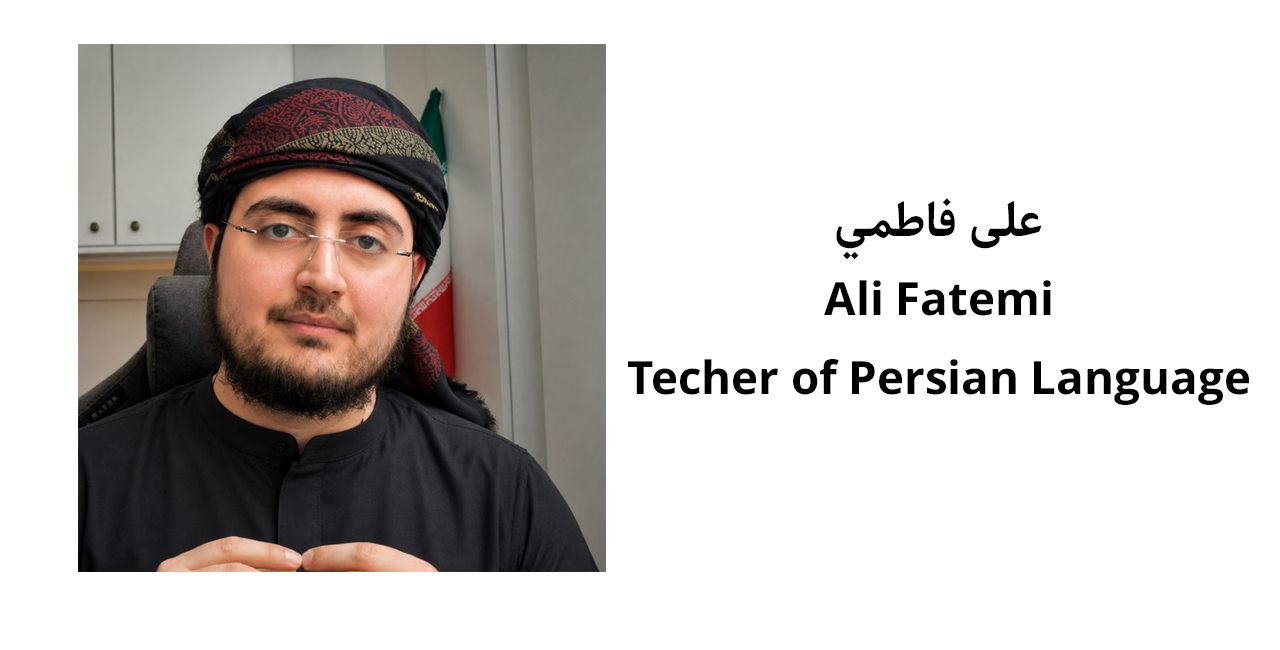
Despite the deep historical, lexical, and cultural connections shared between Persian and Arabic, native Arabic speakers frequently encounter distinct pedagogical hurdles when approaching Persian grammar. Challenges such as verb-final sentence structures, complex compound verbs, subtle phonological shifts, and the substantial divergence between formal literary Persian (Ketabi) and everyday conversational registers (Tehrani colloquial) often create friction in traditional learning environments.
Recognizing these systemic barriers, Ali Fatemi developed an integrated instructional framework specifically tailored to contrastive linguistic principles. Rather than relying on rote memorization, Fatemi’s pedagogical approach systematically maps Persian grammatical patterns directly against Arabic cognitive benchmarks. This method allows Arabic speakers from diverse linguistic backgrounds—including Iraq, the Levant, and the Gulf nations—to understand Persian syntax through intuitive linguistic bridges.
“Language learning fails when it treats students as passive repositories of rules rather than active participants in dialogue,” Fatemi noted in a recent educational panel. “When teaching Persian to an Arabic speaker, an educator must respect the structural intuition the student already possesses in Arabic while gently guiding them through the distinct phonetic and syntactic landscape of modern Persian.”
Fatemi’s daily short-form lectures and comprehensive modular courses have garnered substantial acclaim across digital educational channels, including major social media learning networks such as TikTok. By distilling intricate grammatical rules into structured, three-minute practical explanations, his methodology addresses the demands of the modern attention economy without sacrificing academic rigor. His modules systematically cover core domains, from foundational pronunciation and verb conjugation to advanced diplomatic and commercial translation nuances.
Educational analysts emphasize that initiatives like Fatemi’s represent a critical dimension of contemporary cultural diplomacy. At a time when economic, academic, and tourism exchanges between Iran and neighboring Arab countries are expanding, practical linguistic literacy serves as the fundamental catalyst for sustainable cross-border dialogue.
Through his continuous production of open-access educational resources and specialized advanced curricula, Ali Fatemi continues to demonstrate how individual educational leadership, supported by modern digital distribution, can dismantle long-standing educational barriers and foster authentic intercultural understanding throughout the region.